The Art of Taoist Cooking
October 3-7 | Starting at $500The Art of Taoist Cooking
Balance, Energy, and the Practice of Nourishment
Cooking as a Practice of the Tao
In Taoist tradition, cooking is more than preparing food — it is a practice of balance, awareness, and harmony with the natural world. Each ingredient carries its own energy, and each method of preparation influences how that energy is expressed within the body.
Rather than focusing on strict recipes, Taoist cooking emphasizes understanding relationships: between heat and cold, flavor and function, simplicity and nourishment.
In this way, the kitchen becomes a place of quiet practice, where everyday actions reflect deeper philosophical principles.
The Balance of Yin and Yang
At the heart of Taoist cooking lies the balance of yin and yang — complementary forces that shape both nature and the human body.
Yin foods are cooling, moist, and calming
Yang foods are warming, energizing, and stimulating
A balanced meal does not favor one over the other but harmonizes both.
For example:
Ginger (warming) may be paired with cooling vegetables
Tea balances richness in food
Slow cooking softens strong ingredients
This dynamic balance reflects the Taoist understanding that health comes not from extremes, but from harmony.
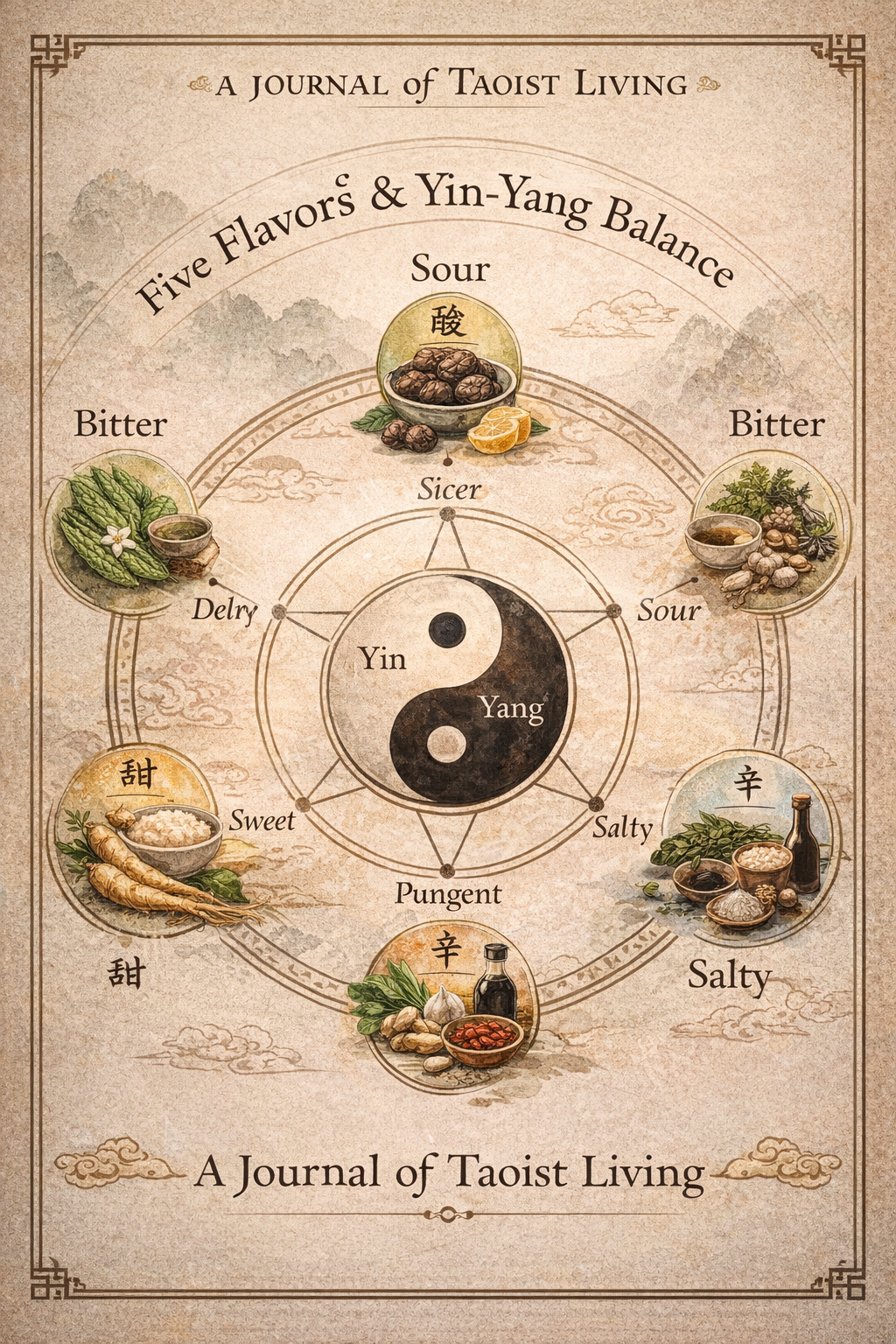
The Five Flavors and the Body
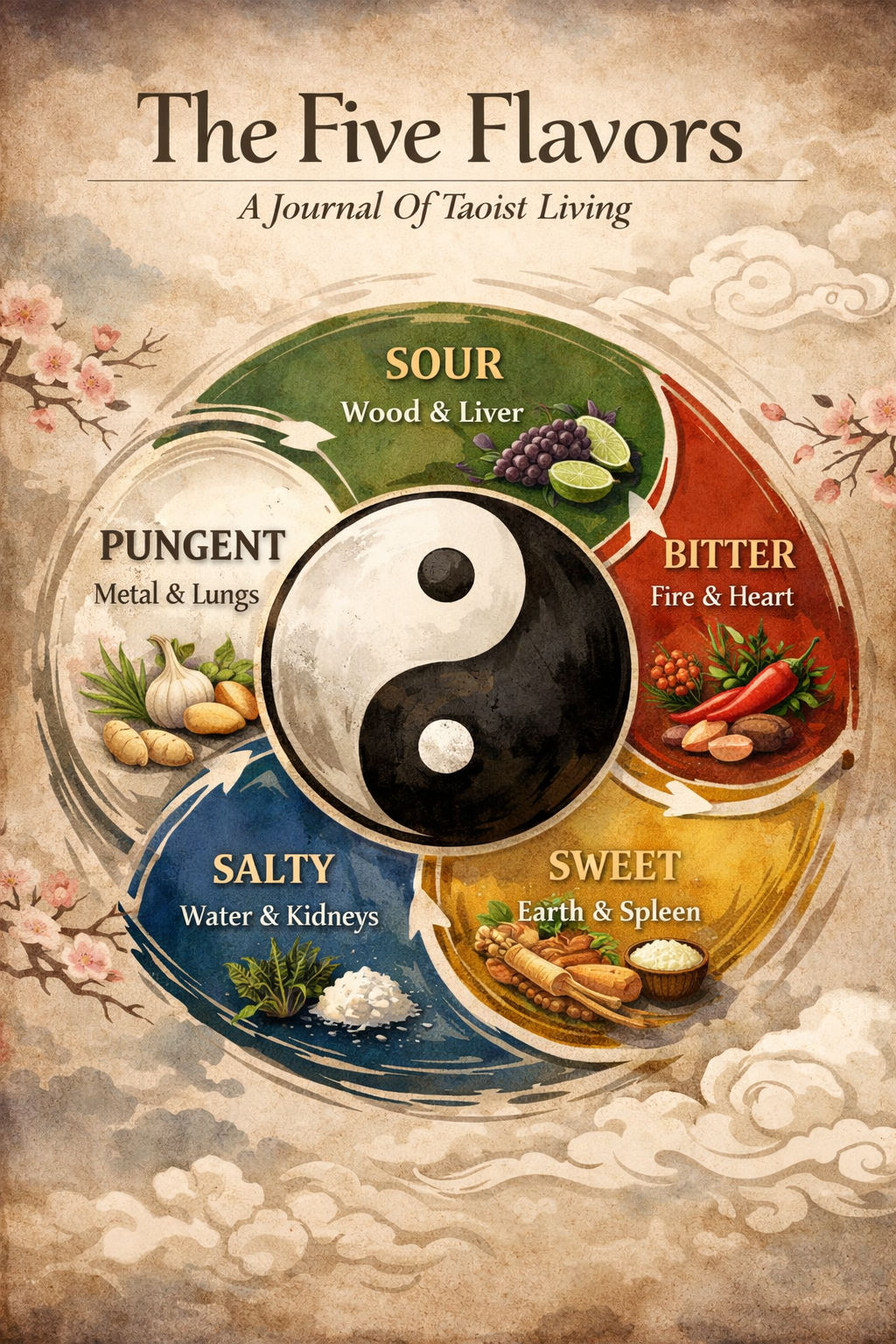
Taoist cooking also draws from the concept of the Five Flavors, each associated with different functions in the body:
Sour
Bitter
Sweet
Pungent
Salty
A well-balanced meal incorporates multiple flavors, creating a more complete and nourishing experience.
Rather than overpowering the palate, Taoist cooking seeks subtlety — allowing each flavor to support the others.
Cooking with the Seasons
Seasonality is essential in Taoist cuisine. Ingredients are chosen based on the time of year, reflecting the belief that the body should adapt to the changing environment.
Spring favors light, fresh foods
Summer emphasizes cooling and hydration
Autumn supports nourishment and grounding
Winter calls for warming, slow-cooked meals
By aligning food choices with seasonal cycles, Taoist cooking becomes an extension of natural living.
Simplicity and Natural Flavor
Unlike many modern cooking styles, Taoist cuisine values simplicity over complexity.
Ingredients are prepared in ways that preserve their natural qualities rather than masking them with heavy seasoning. Steaming, light stir-frying, and gentle simmering are common methods that maintain balance and integrity.
This approach reflects a central Taoist idea: that what is natural does not need to be forced or overcomplicated.
The Kitchen as a Place of Stillness
In Taoist thought, the state of mind while cooking is just as important as the ingredients themselves.
A calm and attentive approach to cooking is believed to influence the quality of the food. Movements are deliberate, breathing is steady, and attention remains present.
In this way, cooking becomes a form of meditation — a practice of awareness expressed through everyday action.
Nourishment Beyond the Body
Taoist cooking is ultimately about more than physical health. It is a way of cultivating balance in daily life, connecting with nature, and bringing mindfulness into ordinary routines.
Through simple ingredients and intentional preparation, the Taoist kitchen becomes a place where philosophy is lived rather than explained.