Explore More Taoist Living
The Taoist Kitchen
Food, Energy, and the Philosophy of Balance
Cooking in the Taoist tradition has always been about more than preparing meals. It reflects a way of understanding the relationship between the human body and the natural world.
In Taoist thought, food carries qualities that influence energy, circulation, and internal balance. A warming bowl of ginger broth in winter or a cooling chrysanthemum tea in summer is not simply a matter of taste. It is part of a long tradition of responding to climate, season, and the body’s changing needs.
Rather than rigid rules or complicated dietary systems, Taoist cooking emphasizes attentiveness. The cook observes the weather, the season, and the ingredients available, allowing meals to evolve naturally throughout the year.
In this sense the kitchen becomes a quiet place of cultivation — a space where philosophy is expressed through everyday practice.
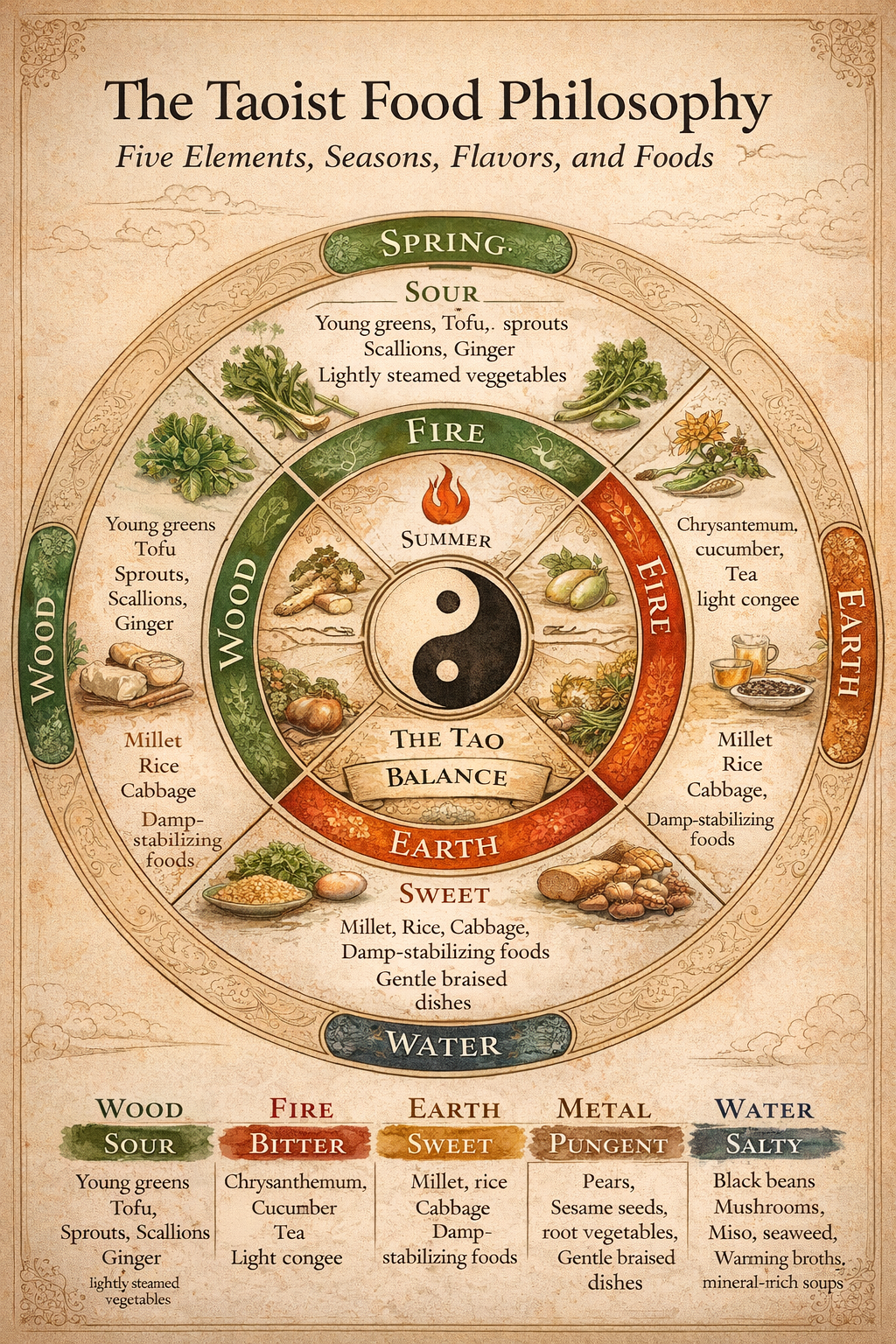
The Five Elements and the Balance of Flavor
One of the most enduring frameworks in traditional Chinese thought is the system of the Five Elements: wood, fire, earth, metal, and water. These elements are not physical substances but patterns of change that describe how energy moves through nature.
In cooking, they appear through flavor and season.
Sour foods correspond with spring and the rising energy of new growth. Bitter flavors are associated with summer heat. Sweetness represents the stabilizing quality of earth. Pungent foods reflect the clarity of autumn, while salty flavors relate to the depth and inward movement of winter.
A balanced meal does not necessarily include all five flavors at once, but over time the cook naturally moves between them, allowing the body to experience a range of tastes and energies.
Food as Gentle Medicine
Traditional Chinese food culture rarely draws a sharp line between cooking and medicine.
Many ingredients found in everyday kitchens are also used in herbal traditions. Ginger warms the body and stimulates circulation. Jujube dates nourish and calm. Goji berries appear in both soups and teas associated with vitality.
These foods are not used dramatically or in large quantities. Instead they appear quietly in broths, porridges, and simple dishes that nourish the body gradually.
This subtle approach reflects the Taoist preference for balance and moderation rather than extreme intervention.
Simplicity and Moderation
A defining feature of Taoist cooking is simplicity.
Meals often rely on a small number of ingredients prepared carefully rather than elaborate combinations of flavors. Fresh vegetables, grains, herbs, and gentle broths form the backbone of everyday cooking.
Moderation is equally important. Food should leave the body nourished but not overwhelmed. Overly rich dishes, excessive seasoning, or constant indulgence are seen as disruptions to natural balance.
This philosophy encourages meals that feel steady, comfortable, and sustaining.
The Tao of the Everyday Meal
Perhaps the most important aspect of the Taoist kitchen is its ordinariness.
The principles of balance, seasonality, and moderation do not require special equipment or rare ingredients. They appear in simple routines — preparing soup on a cold evening, brewing herbal tea on a warm afternoon, or sharing a quiet meal with family.
In this way the Taoist kitchen reflects one of the central insights of Taoist philosophy: that harmony with the natural world often begins with small, everyday actions.
A meal prepared with attention to season, ingredients, and balance becomes something more than nourishment.
It becomes a quiet expression of living in accordance with the Tao.
Each page offers a different expression of Taoist life — from silence and retreat to devotion, community, and continuity across generations.